
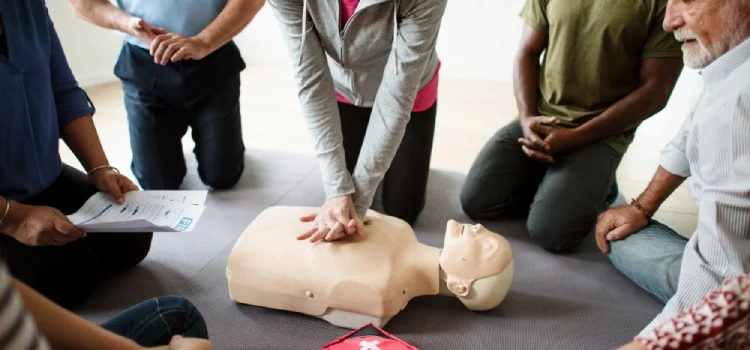
First aid training has become a baseline expectation across a growing number of Canadian workplaces, professions, and personal contexts, and the way Canadians earn certification has shifted considerably over the past several years. Choosing an online first aid course canada residents can rely on now means weighing accreditation standards, course content, employer recognition, and the practical skills each program delivers. With dozens of providers competing for attention, understanding what separates a credible program from a superficial one is the foundation of a worthwhile certification.
Accreditation and Recognition
The first question any prospective student should ask is who recognizes the certificate. In Canada, workplace health and safety regulations vary by province, and certain occupations require certifications issued or approved by specific bodies such as the Canadian Red Cross, St. John Ambulance, the Heart and Stroke Foundation, or provincial workers’ compensation boards. Healthcare professionals, childcare workers, and fitness instructors often face stricter requirements than the general public. Before enrolling, confirm whether the course is accepted by your employer, regulatory college, licensing body, or insurance provider. A credential that is not recognized where it counts has limited practical value, regardless of how convenient or affordable the training was.
Course Content and Skill Coverage
A complete first aid course should cover the recognition and management of life-threatening emergencies, including cardiac arrest, severe bleeding, choking, anaphylaxis, stroke, and shock. It should also address common but less critical situations such as burns, fractures, head injuries, and environmental emergencies like heat stroke and hypothermia. Look for programs that teach current guidelines from the International Liaison Committee on Resuscitation, which most Canadian certifying bodies follow. Content should be updated regularly, and the provider should be transparent about which version of the guidelines the course reflects.
For those certifying for specific roles, content alignment matters. Childcare workers need pediatric-focused training. Healthcare professionals typically require Basic Life Support or Advanced Cardiac Life Support rather than standard first aid. Fitness professionals often need automated external defibrillator training paired with adult CPR. Matching the course to your actual responsibilities is more important than choosing whichever option is shortest or cheapest.
Format and Practical Components
Online first aid certification in Canada generally falls into two categories: fully online courses and blended programs that combine online theory with an in-person skills assessment. Fully online programs work well for refresher training, knowledge updates, and roles where hands-on certification is not legally required. Blended programs are often necessary for occupations that require demonstrated skill competency, particularly anything involving CPR or AED use. Be cautious of any provider claiming full certification with no practical evaluation when your role legally requires one. Verify the format meets your specific compliance need before paying.
Quality online courses include video demonstrations of techniques, scenario-based decision-making exercises, knowledge checks throughout the modules, and a final assessment. Interactive elements matter because passive video watching alone produces poor skill retention. Look for programs that allow you to revisit modules after completion, since first aid skills decay quickly without periodic review.
Verification and Documentation
A legitimate certificate should include a unique identifier, the issue and expiry dates, the name of the certifying body, and a verification method that employers can use to confirm authenticity. Most Canadian provinces require recertification every two to three years, depending on the course type and the workplace context. Reputable providers send automated reminders before expiry and maintain records that students can access if a certificate is lost.
Cost, Time, and Practical Considerations
Online first aid courses in Canada typically range from approximately fifty to two hundred dollars depending on level, duration, and provider. Standard first aid courses generally take six to eight hours of instructional time, while basic first aid or CPR-only programs can be completed in two to four hours. Be wary of courses priced significantly below the market average, as deeply discounted programs sometimes lack proper accreditation, current content, or recognized verification. Conversely, the most expensive option is not automatically the best. Match the program to your specific need and verify recognition before considering price.
First aid training is one of the few investments where the value is measured not in convenience or credentials alone but in the ability to act competently when someone’s life depends on it. For parents, caregivers, healthcare workers, educators, fitness professionals, and Canadians who want to be prepared for the emergencies that occasionally interrupt ordinary life, Simple CPR offers accredited online certification programs designed to meet Canadian standards and equip students with the skills, knowledge, and verified credentials that matter when the moment arrives.